
The March 2024 Reversal: How Pulsifer Changed Everything
Heres what happened. Mark Pulsifer faced a 15-year mandatory minimum for distributing methamphetamine. He pointed to the safety valve - he didnt have a 2-point violent offense, so he thought he qualified under the expanded First Step Act criteria. The government said no: having any one of the three criminal history factors disqualifies you, not all three. The case went to the Supreme Court. In March 2024, the Court ruled 6-3 for the government. Justice Kagan wrote the majority opinion. She adopted what the government called a "distributive and" reading. The statute says defendants dont qualify if they have more then 4 criminal history points AND a prior 3-point offense AND a prior 2-point violent offense. Under the governments interpretation - now the law - you fail if you have any single one of these problems. Think about that for a second. Congress passed the First Step Act specificaly to expand who qualifies. The old rule required defendants to have no more then 1 criminal history point. The new rule allows up to 4 points. That sounds like expansion. But Pulsifer interpreted the new language so narrowly that many defendants who would have qualified under a plain reading suddenly dont. Pulsifer turned the word "and" into "or." Any single disqualifying criminal history factor now blocks safety valve relief entirely. The lower courts had been split on this question. Some read "and" to mean all three factors were required for disqualification. Others read it the way the Supreme Court ultimatly did. Defense attorneys across the country watched their clients lose access to relief they thought was available. March 2024 was a devastating month for federal drug defendants.The "And" That Means "Or": Grammar Determines Prison Time
The statutory language at 18 U.S.C. § 3553(f)(1) says a defendant dosent qualify if they have: "(A) more then 4 criminal history points, excluding any criminal history points resulting from a 1-point offense, (B) a prior 3-point offense, and (C) a prior 2-point violent offense." OK so read that as an ordinary person. If someone has A, B, and C - all three things - they dont qualify. Thats how Justice Gorsuch read it in dissent. He said "an ordinary reader would naturaly understand" that you need all three problems to be disqualified. Thats how English works. If I say you cant enter if you have a hat, a coat, and an umbrella - most people think having just a hat is fine. Justice Kagan disagreed. She found the "and" to be distributive. Under her interpretation, the statute means you dont qualify if you have A, or if you have B, or if you have C. Each one independently disqualifies. The grammar of the statute, she argued, required this reading to avoid making subparagraph A meaningless. Heres were it gets absurd. Your sentence - five years versus fifteen years, ten years versus twenty years - depends on how nine justices interpret a conjunction. The substance of the crime matters less then the syntax of the statute. Grammar class determines prison time. Justice Gorsuch's dissent was blistering. He said the majoritys holding "guarantees that thousands more people in the federal criminal justice system will be denied a chance - just a chance - at an individualized sentence." He called the safety valve "a chance Congress promised in the First Step Act." The Court, he argued, contradicted that promise. The majority acknowledged this. And ruled anyway.The Five Criteria: Every Hurdle You Must Clear
Even after Pulsifer narrows the criminal history requirements, you still have to clear four more hurdles. Miss any one of these and mandatory minimum applies. There at § 3553(f)(1) through (f)(5), and every one of them matters. First, the criminal history requirements that Pulsifer interpreted. You must not have more then 4 criminal history points (excluding 1-point offenses), must not have a prior 3-point offense, and must not have a prior 2-point violent offense. Under Pulsifer, any one of these blocks relief. Second, you must not have used violence or credible threats of violence, or possessed a firearm or other dangerous weapon, in connection with the offense. This sounds straightforward but creates problems. If the government can argue you possessed a weapon during the drug offense - even if you never touched it - you lose safety valve. Third, the offense must not have resulted in death or serious bodily injury to any person. Drug overdoses complicate this. If someone died from drugs you distributed, this factor could block relief even if you never intended harm. Fourth, you must not have been an organizer, leader, manager, or supervisor of others in the offense. Any hint of hierarchy in the drug operation puts this criterion at risk. If you directed anyone else, if you controled any part of the operation, the government will argue you dont qualify. Fifth - and this is were it gets dangerous - you must have truthfuly provided to the Government all information and evidence you have concerning the offense or offenses that were part of the same course of conduct or of a common scheme or plan, AND all information and evidence concerning your own involvement and that of other persons in the offense. The fifth criterion is a proffer trap. You must tell the government everything about the offense AND about your own conduct. Any lie or omission - even about unrelated conduct - disqualifies you.The Proffer Trap: Your Prosecutor Controls Qualification
⚖ Legal Pulse: Key Statistics
15,000+
Federal Cases Filed Annually
90%
Plea Before Trial
The Guidelines Gap: Statute vs USSG § 5C1.2
Heres something that creates confusion even for experienced practitioners. The First Step Act changed 18 U.S.C. § 3553(f) - the statute. But it didnt change USSG § 5C1.2 - the sentencing guidelines provision. The statute now allows defendants with up to 4 criminal history points; the guidelines still reference the old requirement of no more then 1 criminal history point. This matters because the safety valve provides two benefits. First, the statute allows the court to sentence below the mandatory minimum. Second, the guidelines provide a 2-level reduction in offense level. The statute governs the first benefit. The guidelines govern the second. The Sentencing Commission recognized this mismatch. They issued guidance clarifying that defendants who meet the new statutory criteria should also get the 2-level reduction - even though the guidelines text wasnt formally amended. But guidance isnt the same as amended text. Some courts might still apply the literal guideline language. This creates a strange argument at sentencing. Defense counsel must argue that the guidelines text should be ignored in favor of Commission guidance interpreting the statute. Its not a losing argument - the Commission specificaly addressed this issue - but its an unnecessary complication that exists because nobody bothered to update the guidelines when the statute changed. The Commission has signaled it will formaly amend § 5C1.2 to match the statutory language. But until that happens, the gap remains. Defense attorneys must navigate both the statute and the guidelines, making arguments about which controls when they conflict.The December 21 Cutoff: Convictions That Came Too Early
The First Step Acts safety valve expansion applies only to convictions entered AFTER December 21, 2018. Not offenses committed after that date. Not charges filed after that date. Not even guilty pleas entered after that date. Convictions - meaning the judgment in the case. Think about what this means for someone whose conduct occurred entirely after the First Step Act passed but whose case moved slowly through the system. If your judgment was entered on December 20, 2018, you get the old narrow rule - no more then 1 criminal history point. If your judgment was entered on December 22, 2018, you get the expanded version. Two days of court scheduling can mean years in prison. The retroactivity cutoff affects thousands of defendants currently serving time. Someone sentenced in early December 2018 under the old rule might have qualified under the new rule if there case had just taken two more weeks to resolve. But the law dosent allow retroactive application. They serve the mandatory minimum despite the expansion that came days later. This is one of the cruelest aspects of federal sentencing reform. Congress passes a law expanding relief. The law applies only prospectively. People sentenced the day before are permanently excluded. There serving longer sentences then people with identical conduct sentenced the day after. The difference isnt what they did - its when the court entered judgment. At Spodek Law Group, we check the timing of every conviction carefully. For clients sentenced after December 21, 2018, the expanded criteria apply. For clients facing sentencing now, the expanded criteria apply (subject to Pulsifer's narrowing). But for anyone sentenced before that date, the old rules control - and no amount of First Step Act promises can change that.The Single Factor Problem: Old Convictions Block Relief
Under Pulsifer's interpretation, a single 2-point violent offense from your past blocks safety valve forever. No consideration of rehabilitation. No credit for decades of law-abiding conduct. No evaluation of wheather you actualy pose a continuing threat. The conviction exists in your record. Relief is denied. Imagine this scenario. Your 22 years old and get into a bar fight. Your convicted of assault, sentenced to probation, complete it successfully. You spend the next twenty years building a life - steady job, family, community involvement. At 42, you make a terrible decision and get involved in a drug case. Federal charges follow. That bar fight from two decades ago now costs you the safety valve. Your looking at mandatory minimum instead of below-minimum sentencing. Five years becomes ten. Ten becomes twenty. All because of one 2-point violent offense from half your lifetime ago. The guidelines dont ask wheather youve changed. They dont consider rehabilitation. They dont evaluate current dangerousness. They count points. Your criminal history score includes that old assault conviction. Under Pulsifer, its mere existence closes the valve. This is what Justice Gorsuch meant about denying "thousands more people" a chance at individualized sentencing. The safety valve was supposed to provide exactly that - a chance for the judge to consider the individual circumstances and sentence below the mandatory minimum. Pulsifer took that chance away from everyone with a single disqualifying prior, regardless of how old that prior is or how much theyve changed. The permanence of disqualification is particularly harsh for drug defendants. Many people caught up in federal drug cases have prior records - thats the nature of addiction and the circumstances that surround drug activity. Under the old rule, some of these defendants still qualified for safety valve. Under Pulsifer, one prior mistake can follow you for life, locking you out of the very relief Congress created specifically for low-level offenders.
Fighting for Safety Valve After Pulsifer

Defense Team Spotlight
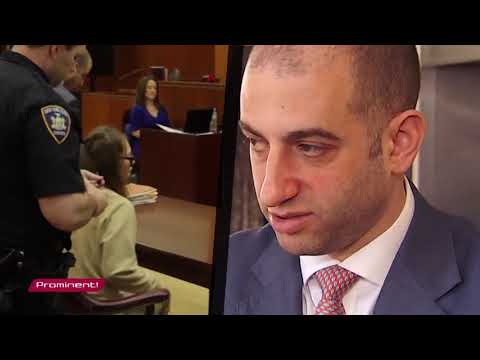
Todd Spodek
Lead Attorney & Founder
Featured on Netflix’s “Inventing Anna,” Todd brings decades of experience defending clients in complex criminal cases.
Multi-State Bar
Federal Courts
US Supreme Court
Meet the Full Team →
Frequently Asked Questions
No. You have the right to remain silent and the right to an attorney. Invoke both rights immediately and contact Spodek Law Group.
Every case is different. We offer free initial consultations to evaluate your case and discuss our fee structure.
An arraignment is your first court appearance where charges are formally read. You enter a plea and bail may be set. Having an attorney present is critical.
Facing Criminal Charges And Have Questions? We Can Help, Tell Us What Happened.