
New York's DWI Law - Driving While Ability Impaired
New York State's Vehicle and Traffic Law section 1192.1 prohibits driving while ability impaired, commonly referred to as "DWAI." This law makes it illegal to operate a motor vehicle while your ability is impaired by alcohol or drugs, even if your blood alcohol content is below the 0.08% threshold for the more serious Driving While Intoxicated (DWI) charge. DWAI is a traffic infraction, not a crime, but it still carries serious penalties like fines, license suspension, and potential jail time for repeat offenses. Let's take an in-depth look at New York's DWAI law - what it means, how it's enforced, penalties, and strategies for fighting the charge.What Does New York Law Consider "Impaired" Ability?
The key language in VTL 1192.1 states that "No person shall operate a motor vehicle while the person's ability to operate such motor vehicle is impaired by the consumption of alcohol." 1 So what does it mean for your driving "ability" to be "impaired" by alcohol? The law does not specify a blood alcohol content (BAC) threshold. Instead, impairment is determined through field sobriety testing and officer observation. Signs of impairment may include: 2 Difficulty following instructions Swaying, unsteady balance Slurred speech Bloodshot or glassy eyes Slow reactions and reflexes Studies suggest that impairment often begins at a BAC around 0.05%, but there is no hard cutoff. Individual reactions to alcohol vary. Even at lower BAC levels like 0.02-0.04%, many people exhibit some mild impairment that could justify a DWAI charge.How DWAI Differs from DWI
New York's DWI law, VTL 1192.2, prohibits driving with a BAC of 0.08% or higher. This is a "per se" violation, meaning the BAC alone establishes intoxication, regardless of your outward behavior. DWAI under 1192.1 requires evidence of actual impairment, not just a BAC number. However, having a BAC above 0.05% but below 0.08% creates a "rebuttable presumption" of impairment. This means the chemical test alone is legally sufficient to prove impairment unless you provide evidence to rebut it. 3 While DWAI is not considered as severe as DWI, it still carries up to a $500 fine, up to 15 days in jail, a 90-day license suspension, and surcharges of $260-$395 per year for three years. 4 Penalties increase for repeat offenses within five years.DWAI Drugs Charges
In addition to alcohol impairment, VTL 1192.1 also prohibits driving while impaired by any drug, legal or illegal. This is known as "DWAI-Drugs." The same kinds of field sobriety tests used for alcohol impairment may be used to assess drug intoxication - balance, coordination, pupil size, pulse rate, and behavioral indicators. Drug recognition experts (DREs) can also examine signs like blood pressure and muscle tone to identify categories of drugs. 5 For DWAI-Drugs, there is no BAC-equivalent measurement. The prosecution must prove actual observable impairment caused by drug consumption. Defenses often challenge the officer's subjective judgments of impairment.Enforcement Through Traffic Stops and Checkpoints
⚖ Legal Pulse: Key Statistics
15,000+
Federal Cases Filed Annually
90%
Plea Before Trial
Penalties for DWAI Convictions
A first DWAI offense carries these standard penalties: Up to $500 fine plus $260/year in surcharges for 3 years 90-day license suspension Up to 15 days jail Possible ignition interlock requirement Penalties escalate for repeat DWAI convictions within 5 years or a prior DWI conviction within 10 years. A second DWAI within 5 years becomes a misdemeanor with fines up to $750 and jail up to 30 days. A third or subsequent offense can bring fines up to $1,500 and jail up to 180 days. Hard license suspensions also extend from a minimum of 6 months up to a full year. Multiple offenses require more years of interlock mandates. Jail time is not mandatory for DWAI but commonly imposed for aggravated cases.Long-Term Consequences
Beyond the immediate fines and license suspension, a DWAI conviction stays on your New York driving record for 10 years and can increase insurance premiums for years. It also counts as a prior offense that enhances penalties for any subsequent alcohol or drug driving offense. Multiple DWAI offenses on your record can negatively impact employment requiring driving, trigger intervention programs, or even lead to felony charges if serious accidents result. Out-of-state drivers may face impacts in their home state under interstate license compacts.Fighting DWAI Charges
With so much at stake, it's imperative to mount the strongest defense possible against DWAI charges. Here are some key strategies to fight the charges: Challenge the Stop If there was no legitimate reason for the traffic stop in the first place, the whole case could potentially be thrown out due to an illegal seizure under the 4th Amendment. Any minor technical error in the police report on the cause for the stop could create reasonable doubt. Contest Field Sobriety Tests The officer's observations during out-of-car testing provide the primary evidence of impairment. But field sobriety tests have been proven unreliable, with a 32% error rate in one study. Factors like weather, terrain, injuries, or nervousness often affect results. Dispute Chemical Test Results Breathalyzers have a +/- 0.01% margin of error. Proper procedures must be proven for results to be admissible. The defense can scrutinize calibration, maintenance, technician training, and other factors to possibly suppress results. Question Drug Recognition Evidence Drug recognition examiner (DRE) opinions involve considerable subjectivity. The defense can challenge their expertise, accuracy, and whether alleged indicators actually demonstrate impairment. Raise Medical Conditions Many medical conditions like inner ear disorders can mimic signs of intoxication during field testing. Diabetes, acid reflux, and other issues can also create false high breath test results. Negotiate Plea Reductions Prosecutors frequently reduce DWAI charges to non-alcohol offenses like reckless driving to avoid license suspensions. Deferred prosecution agreements may allow charges to be dismissed after treatment.
DWAI Laws Keep Evolving
New York's DWAI laws continue to be revised and expanded by the legislature. Recent changes include: Leandra's Law - Increased penalties for all DWI/DWAI charges when passengers under 16 are in the vehicle. Additional Screening Tests - Officers can now also request saliva tests, not just breath tests, after stops. Repeat Offender Felonies - Repeat DWAI offenders now face possible felony charges and jail up to 4 years. The climate around all impaired driving charges has become increasingly strict in New York and nationwide. An experienced DWI defense attorney is essential to navigate the complex and evolving laws.Get Experienced Legal Help
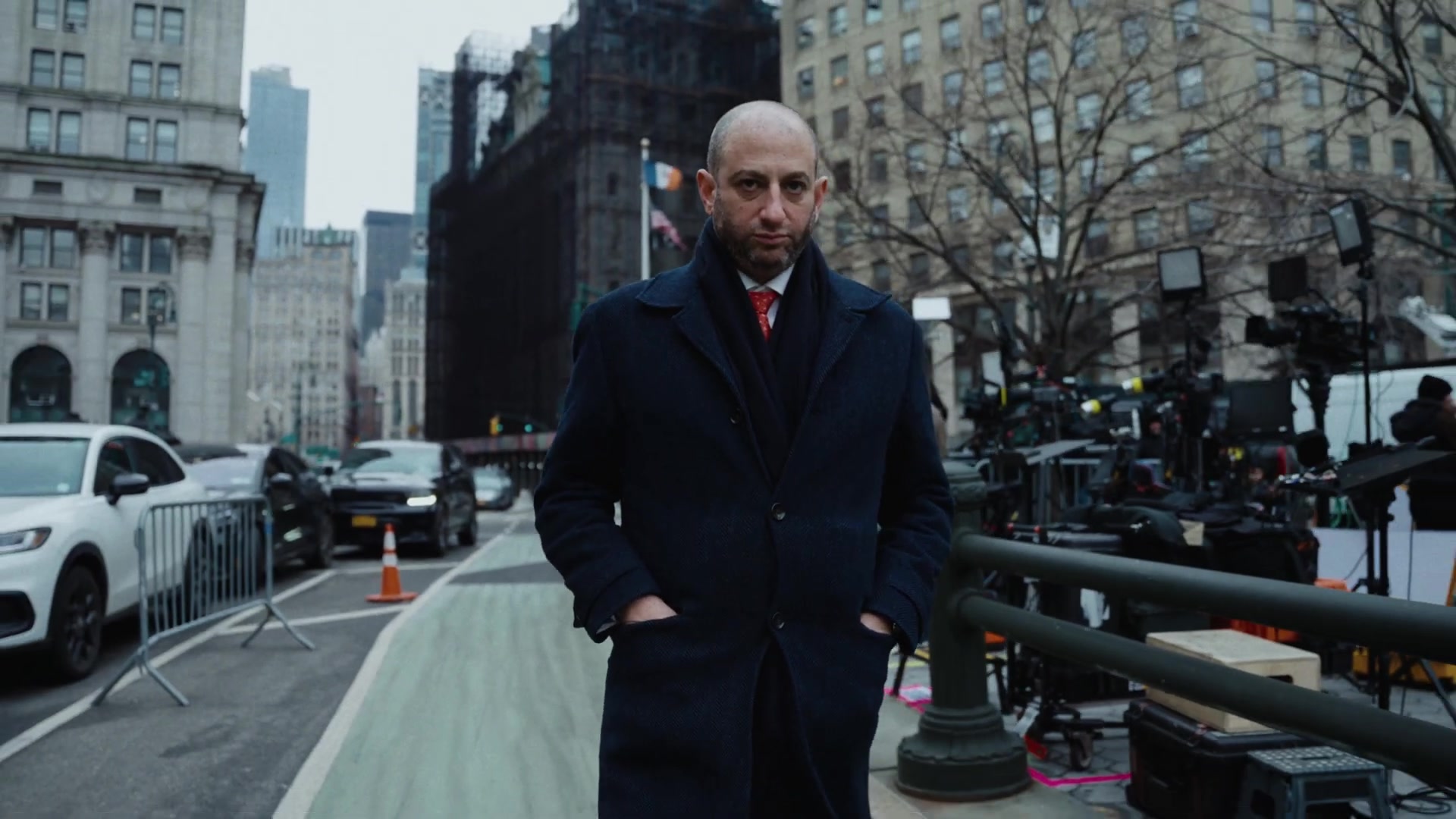
Defense Team Spotlight
Todd Spodek
Lead Attorney & Founder
Featured on Netflix’s “Inventing Anna,” Todd brings decades of experience defending clients in complex criminal cases.
Multi-State Bar
Federal Courts
US Supreme Court
Meet the Full Team →
References
1 https://ypdcrime.com/vt/article31.php#t1192-1 2 https://www.tilemlawfirm.com/new-york-vehicle-1192-1-driving-while-ability-impaired-by-alcoho.html 3 https://www.nycourts.gov/judges/cji/3-VTL/VTL_1192/1192%281%29.pdf 4 https://dmv.ny.gov/tickets/penalties-alcohol-or-drug-related-violations 5 https://www.nhtsa.gov/sites/nhtsa.gov/files/documents/sfst_full_instructor_manual_2018.pdf 6 https://www.oyez.org/cases/1989/88-1897 https://ypdcrime.com/vt/article31.php#t1192-1 https://www.ncbi.nlm.nih.gov/pmc/articles/PMC3077246/ https://www.nysenate.gov/legislation/laws/VAT/1192 https://dmv.ny.gov/alcohol-drug-use https://www.nysenate.gov/newsroom/press-releases/michael-gianaris/senate-majority-passes-legislation-crack-down-repeat-dwiFrequently Asked Questions
No. You have the right to remain silent and the right to an attorney. Invoke both rights immediately and contact Spodek Law Group.
Every case is different. We offer free initial consultations to evaluate your case and discuss our fee structure.
An arraignment is your first court appearance where charges are formally read. You enter a plea and bail may be set. Having an attorney present is critical.
Facing Criminal Charges And Have Questions? We Can Help, Tell Us What Happened.